

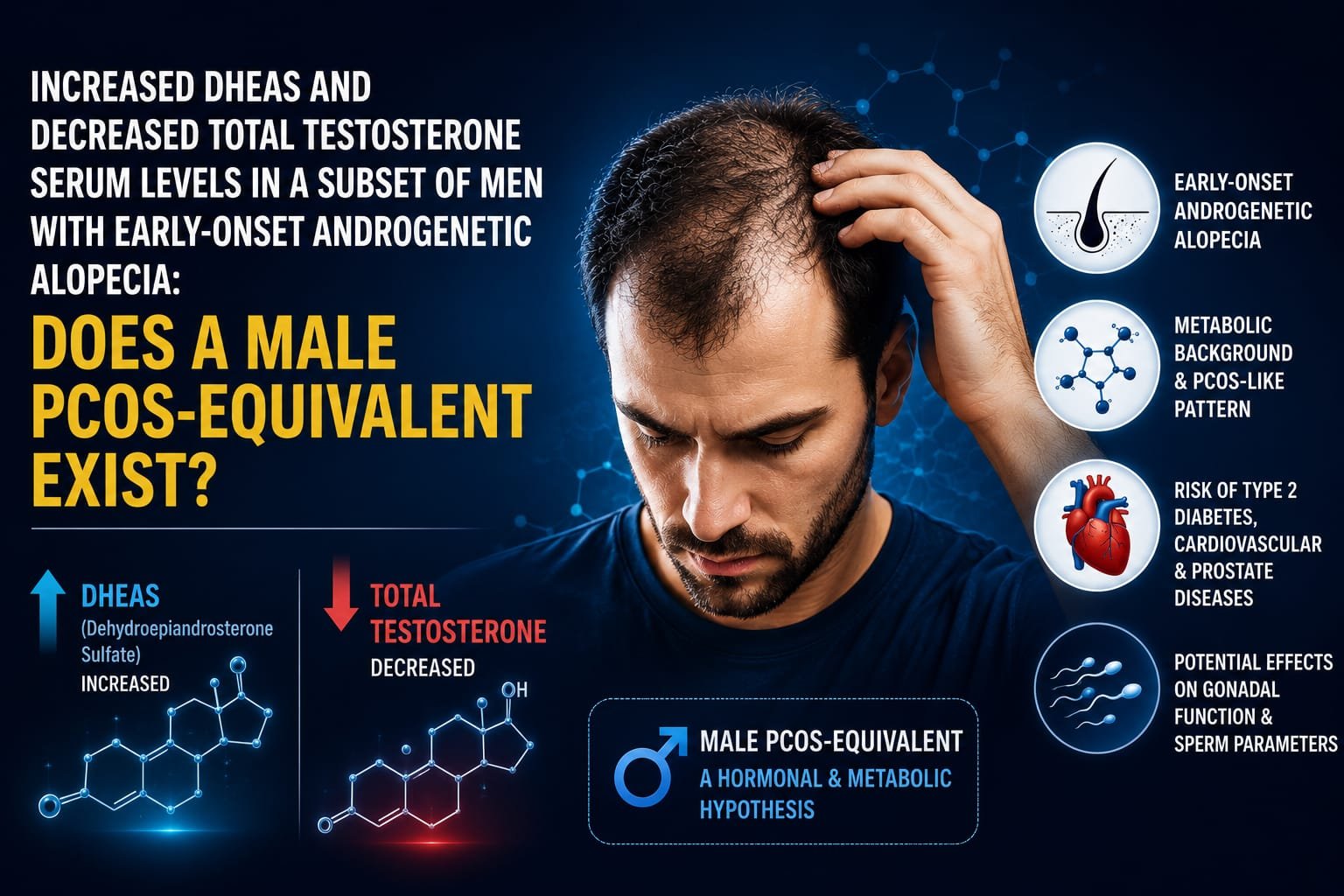
Polycystic Ovary Syndrome (PCOS) is widely recognized as a condition affecting women, but emerging research suggests that some men may share similar hormonal and metabolic characteristics. A recent study exploring early-onset androgenetic alopecia (male pattern baldness) found that a subset of men exhibited hormone profiles resembling those seen in women with PCOS, raising the question: Can a male PCOS equivalent exist?
While this concept is still under investigation, the findings offer valuable insights into men’s metabolic and hormonal health.
What Did the Study Find?
The research focused on men under the age of 35 with early-onset androgenetic alopecia (AGA). Researchers evaluated hormone levels, metabolic markers, and reproductive health to identify patterns similar to those observed in PCOS.
The study found that some men had:
- Higher levels of DHEAS (Dehydroepiandrosterone Sulfate), an androgen produced by the adrenal glands.
- Lower total testosterone levels compared to healthy individuals.
- Features associated with insulin resistance and metabolic dysfunction.
- Increased body fat and other metabolic risk factors in certain participants.
These findings suggest that a subgroup of men may have hormonal and metabolic traits comparable to those seen in women with PCOS.
Why Is Early Hair Loss Important?
One of the strongest indicators identified in the research was early-onset male pattern baldness, particularly before the age of 35.
Although hair loss alone does not indicate a hormonal disorder, when combined with metabolic abnormalities such as insulin resistance or excess body fat, it may signal an underlying hormonal imbalance that deserves further evaluation.
Understanding DHEAS and Testosterone
Elevated DHEAS
DHEAS is a hormone produced by the adrenal glands and serves as a precursor to male and female sex hormones. Elevated levels may reflect increased androgen activity, which has also been observed in women with PCOS.
Lower Total Testosterone
The study reported that some participants had lower total testosterone despite showing signs of androgen-related conditions such as early hair loss. This highlights the complexity of hormone regulation and reinforces the need for comprehensive hormonal assessment rather than relying on a single laboratory value.
The Link Between Hormones and Metabolic Health
The research suggests that hormonal changes may extend beyond hair loss and influence overall metabolic health.
Potential risks include:
- Insulin resistance
- Prediabetes and Type 2 diabetes
- Increased abdominal fat
- High cholesterol
- Cardiovascular disease
Because these conditions often develop gradually, identifying hormonal abnormalities early may help reduce long-term health risks.
Is Male PCOS an Official Diagnosis?
At present, Male PCOS is not an officially recognized medical condition. Instead, it is an emerging research concept describing men who share hormonal, metabolic, and genetic characteristics with women affected by PCOS.
More large-scale studies are needed before formal diagnostic criteria can be established.
Supporting Hormonal and Metabolic Health
Whether or not someone fits the profile of a male PCOS equivalent, maintaining good metabolic health is essential. Healthy habits can significantly lower the risk of insulin resistance and related complications.
Consider these lifestyle strategies:
- Eat a balanced, nutrient-rich diet with plenty of whole foods.
- Limit added sugars and highly processed foods.
- Stay physically active with regular aerobic and strength-training exercises.
- Maintain a healthy body weight.
- Get routine health screenings for blood sugar, cholesterol, and hormone levels when recommended.
Conclusion
Research into the male equivalent of PCOS is expanding our understanding of how genetics, hormones, and metabolism are connected across both sexes. The study suggests that some men with early-onset androgenetic alopecia may also experience hormonal changes such as elevated DHEAS and lower testosterone along with metabolic abnormalities similar to those seen in PCOS.
Although more research is needed to confirm this condition, the findings emphasize the importance of early evaluation, healthy lifestyle choices, and personalized nutrition to support long-term hormonal and metabolic health.