

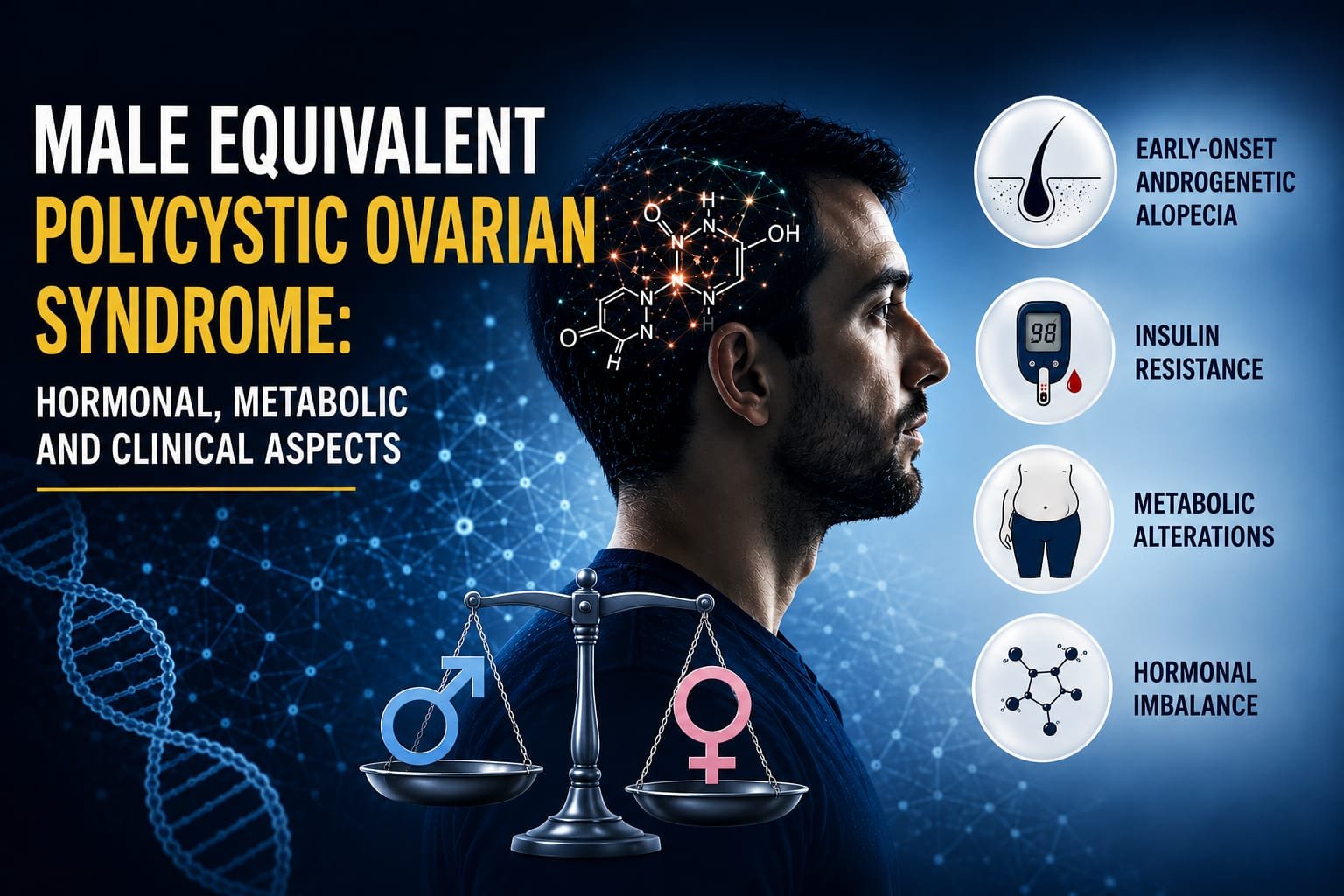
For many years, Polycystic Ovary Syndrome (PCOS) has been considered a condition that only affects women. However, growing scientific research suggests that men may experience a “male equivalent of PCOS,” sharing similar hormonal, metabolic, and genetic characteristics. Although men cannot develop PCOS in the traditional sense, they may inherit the same genetic tendencies that increase their risk of hormonal imbalance, insulin resistance, and early hair loss.
Understanding this emerging concept can help identify health risks earlier and encourage lifestyle changes that improve long-term well-being.
What Is the Male Equivalent of PCOS?
Researchers use the term Male PCOS to describe a group of hormonal and metabolic abnormalities found in men, particularly those with a family history of PCOS. Studies suggest that male relatives of women with PCOS often exhibit similar metabolic traits, even though they do not have ovaries.
These men may experience:
- Early-onset male pattern baldness
- Insulin resistance
- Increased androgen activity
- Elevated risk of metabolic disorders
- Changes in hormone levels
While Male PCOS is not currently an officially recognized medical diagnosis, it is an area of active research.
Is Male PCOS Genetic?
Evidence suggests that genetics play a significant role. Men with mothers, sisters, or daughters diagnosed with PCOS may inherit genes associated with hormonal and metabolic dysfunction.
These inherited traits may contribute to:
- Insulin resistance
- Abnormal cholesterol levels
- Hormonal imbalances
- Increased risk of obesity
- Cardiovascular disease
Common Signs and Symptoms
Although symptoms vary from person to person, possible signs include:
Early Male Pattern Baldness
One of the strongest indicators is androgenetic alopecia, particularly when hair loss begins at a young age.
Insulin Resistance
The body becomes less responsive to insulin, causing blood sugar levels to rise over time.
Symptoms may include:
- Fatigue
- Increased hunger
- Weight gain around the abdomen
- Difficulty losing weight
Hormonal Changes
Some men may experience:
- Lower testosterone levels
- Increased free androgen activity
- Changes in sex hormone-binding globulin (SHBG)
Metabolic Problems
Research has linked Male PCOS to:
- High cholesterol
- Elevated triglycerides
- High blood pressure
- Increased cardiovascular risk
How Is Male PCOS Different from Female PCOS?
Although both conditions share similar metabolic and hormonal features, there are important differences.
| Female PCOS | Male Equivalent PCOS |
| Irregular menstrual cycles | Early male pattern baldness |
| Ovarian cysts | No ovarian involvement |
| Excess facial hair | Increased androgen activity |
| Infertility concerns | Possible hormonal imbalance |
| Insulin resistance | Insulin resistance |
Can Male PCOS Affect Fertility?
Current research is still investigating the relationship between Male PCOS and fertility. Some studies suggest hormonal changes may influence reproductive health, but more evidence is needed before drawing firm conclusions.
Anyone experiencing fertility concerns should consult a healthcare professional for appropriate evaluation.
How Is Male PCOS Managed?
Since there is no official diagnostic guideline, management focuses on reducing metabolic risk factors and improving overall health.
Recommended lifestyle strategies include:
Follow a Balanced Diet
Choose nutrient-rich foods such as:
- Whole grains
- Lean proteins
- Healthy fats
- Fresh fruits
- Vegetables
- High-fiber foods
Limiting processed foods and added sugars may improve insulin sensitivity.
Maintain a Healthy Weight
Even modest weight loss can improve blood sugar regulation and hormone balance.
Exercise Regularly
Aim for at least 150 minutes of moderate physical activity each week, including both cardiovascular exercise and strength training.
Monitor Health Regularly
Routine screening for:
- Blood sugar
- Cholesterol
- Blood pressure
- Weight
- Waist circumference
When Should You Seek Professional Advice?
Consult a healthcare provider if you have:
- Early-onset hair loss
- A strong family history of PCOS
- Difficulty managing weight
- High blood sugar
- High cholesterol
- Persistent fatigue
Early assessment may help identify metabolic concerns before complications develop.
Conclusion
The concept of Male PCOS is an emerging area of medical research that highlights the shared genetic and metabolic factors between men and women affected by PCOS. While it is not yet an officially recognized medical diagnosis, evidence suggests that men with a family history of PCOS may have a higher risk of insulin resistance, hormonal imbalance, early hair loss, and metabolic disorders.
Recognizing these early warning signs and adopting a healthy lifestyle including balanced nutrition, regular exercise, and routine health screenings can make a meaningful difference in long-term health outcomes.