

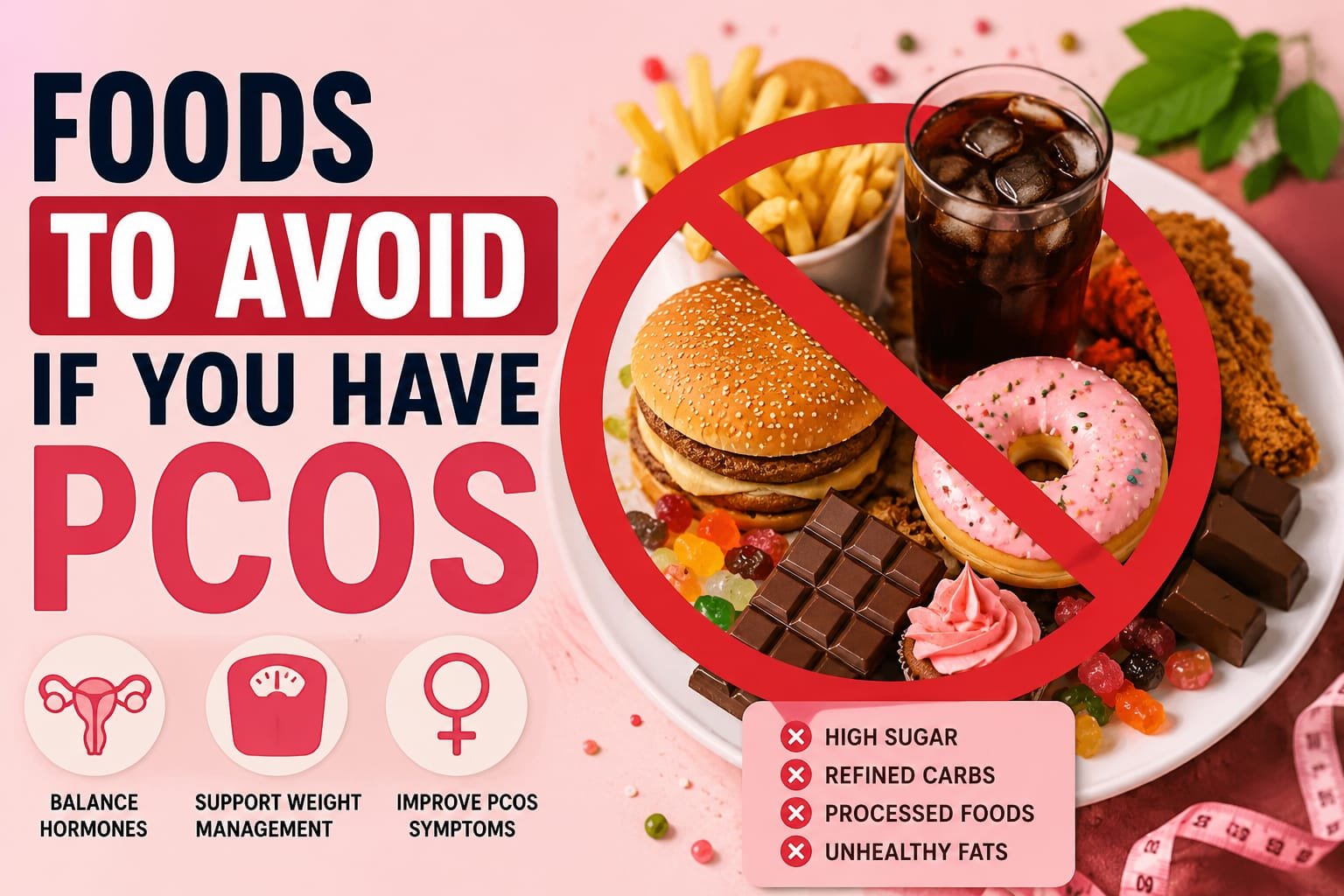
Polycystic Ovary Syndrome (PCOS) is a hormonal condition that can affect metabolism, insulin sensitivity, weight, and reproductive health. While there is no one-size-fits-all diet for PCOS, making healthier food choices can help manage symptoms and improve overall well-being.
Here are some foods you may want to limit or avoid if you have PCOS.
1. Sugary Foods and Drinks
Foods high in added sugar can cause rapid spikes in blood sugar and insulin levels, which may worsen insulin resistance—a common concern in women with PCOS.
Limit:
- Soft drinks
- Packaged fruit juices
- Candy
- Cakes and pastries
- Sweetened cereals
Choose instead: Fresh fruit, unsweetened beverages, or naturally sweet snacks.
2. Refined Carbohydrates
Refined carbs are quickly digested, leading to blood sugar fluctuations that can increase cravings and fatigue.
Avoid or limit:
- White bread
- White rice
- Regular pasta
- Cookies
- Crackers made with refined flour
Choose instead: Whole grains like brown rice, oats, quinoa, and whole-wheat bread.
3. Highly Processed Foods
Processed foods are often high in unhealthy fats, sodium, and added sugars while being low in nutrients.
Examples include:
- Chips
- Instant noodles
- Frozen fast foods
- Processed meats
- Packaged snacks
4. Fried Foods
Deep-fried foods are often high in unhealthy fats and calories, which may contribute to weight gain and inflammation.
Limit:
- French fries
- Fried chicken
- Fried snacks
- Fast food
Choose grilled, baked, or steamed alternatives instead.
5. Sugary Coffee and Energy Drinks
Flavored coffees, energy drinks, and sweetened beverages can contain large amounts of sugar and calories.
Replace them with:
- Black coffee (in moderation)
- Green tea
- Herbal tea
- Water infused with lemon or mint
Foods to Include Instead
A PCOS-friendly eating pattern focuses on nutrient-rich, whole foods such as:
- Fresh vegetables
- Fruits
- Whole grains
- Lean proteins
- Beans and lentils
- Healthy fats like nuts, seeds, avocado, and olive oil
- Low-fat dairy or unsweetened alternatives
These foods provide fiber, vitamins, minerals, and healthy fats that support overall health and may help improve insulin sensitivity.
Lifestyle Tips for Managing PCOS
In addition to healthy eating:
- Exercise regularly.
- Stay hydrated.
- Get 7–9 hours of quality sleep.
- Manage stress through relaxation techniques or physical activity.
- Follow a personalized nutrition plan if recommended by a registered dietitian.
Conclusion
Managing PCOS isn’t about eliminating every favorite food, it’s about making balanced, sustainable choices. Limiting sugary foods, refined carbohydrates, fried foods, and highly processed snacks while focusing on whole, nutrient-dense foods can help support hormone balance, improve insulin sensitivity, and promote overall health.
At Diet with Seemin, we believe in personalized nutrition plans that are realistic, enjoyable, and designed to help you manage PCOS while maintaining a healthy lifestyle.