

You may be eating better, watching your portions, and trying to stay active, yet your blood sugar can still feel difficult to manage.
That’s because blood glucose isn’t influenced by food alone. Sleep, stress, activity, medications, meal timing, hydration, and overall lifestyle can all play a role.
Understanding these less obvious factors can help you identify habits worth discussing with your healthcare professional and make your daily routine more supportive of healthy blood sugar management.
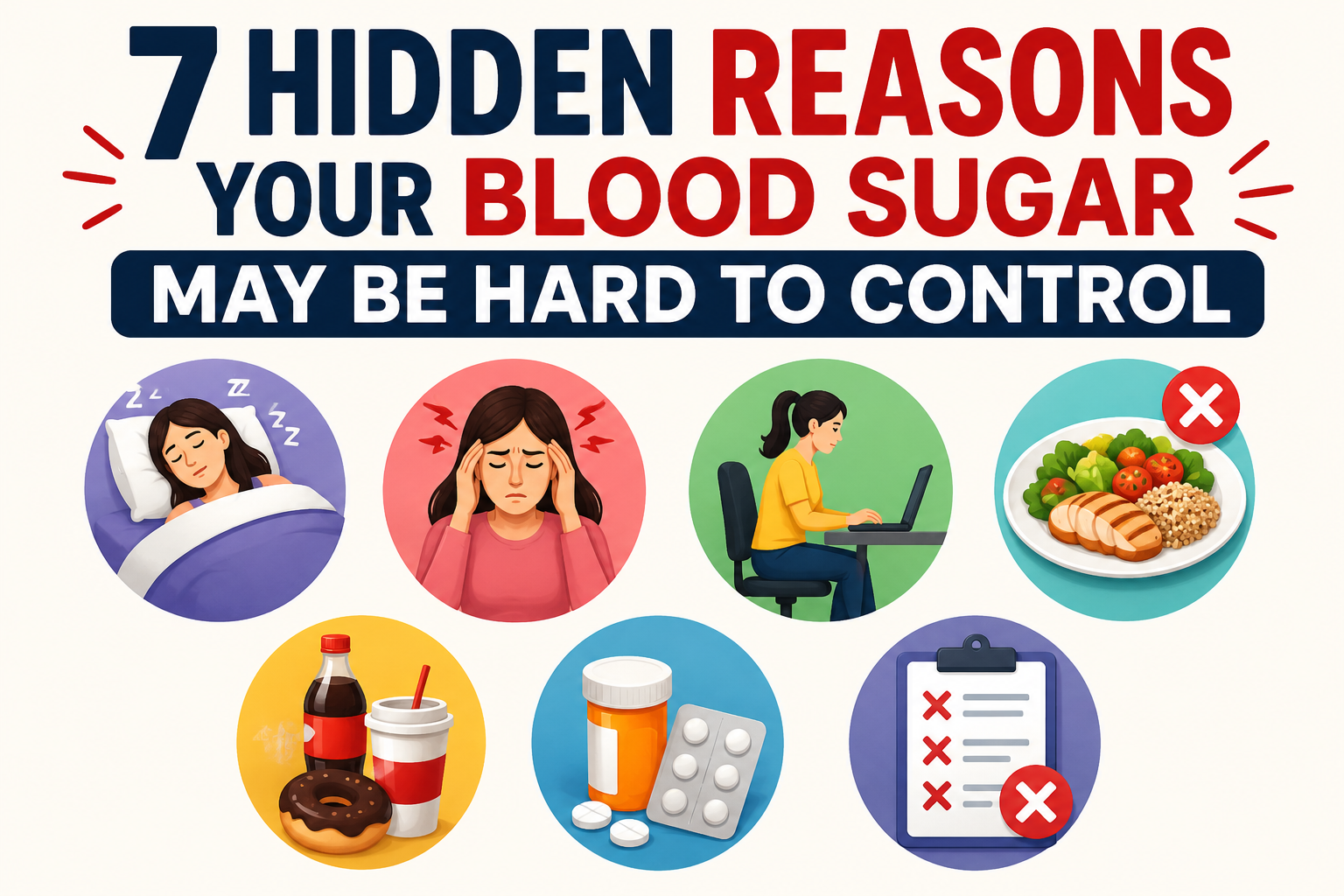
Here are 7 hidden reasons your blood sugar may be harder to control than expected.
1. You’re Not Getting Enough Quality Sleep 😴
Poor or insufficient sleep can affect hormones involved in appetite, stress, and glucose regulation. It may also make it harder to maintain healthy eating and activity habits.
What you can do:
Aim for a consistent sleep schedule and create a relaxing bedtime routine. Reducing screen time before bed and keeping your sleeping environment comfortable may also help.
2. Chronic Stress Is Affecting Your Routine
When you’re stressed, your body releases hormones such as cortisol and adrenaline. These hormones can influence blood glucose levels.
Stress can also indirectly affect blood sugar by increasing cravings, disrupting sleep, or making healthy routines harder to maintain.
What you can do:
Try simple stress-management habits such as walking, breathing exercises, stretching, journaling, or spending time doing activities you enjoy.
3. You’re Sitting for Long Periods
Regular exercise is beneficial, but your overall daily movement matters too.
Spending most of the day sitting can mean you’re getting much less activity than you realize.
What you can do:
Take short movement breaks throughout the day. A brief walk after meals can be an easy way to add more activity to your routine.
4. Your Meals May Be Missing Protein or Fiber
A meal based mainly on refined carbohydrates may be less satisfying and can affect blood glucose differently than a meal that combines carbohydrates with protein, fiber, and healthy fats.
What you can do:
Build balanced meals around vegetables, a protein source, and fiber-rich carbohydrate choices.
For example:
Grilled chicken + vegetables + lentils or whole grains
or
Eggs + vegetables + whole-grain toast
5. You’re Drinking More Sugar Than You Realize 🥤
Sugary drinks can be easy to overlook because they don’t always feel like part of a meal.
Soft drinks, sweetened juices, flavored coffees, and sugary teas can contribute significant amounts of added sugar.
What you can do:
Choose water more often and reduce the amount of added sugar in tea and coffee. Unsweetened beverages can be a simple swap.
6. Your Medications or Health Conditions May Be Playing a Role
Blood sugar can be affected by medications, illness, hormonal changes, and underlying health conditions.
For example, infections or periods of illness can temporarily affect glucose levels.
If your blood sugar remains unexpectedly high or low despite consistent lifestyle habits, don’t assume it’s simply a diet problem.
What you can do:
Keep track of your readings and discuss persistent changes with your doctor. Never change or stop prescribed medication without medical guidance.
7. You’re Focusing on One Meal Instead of Your Overall Pattern
One healthy meal won’t automatically fix blood sugar management—and one less-than-ideal meal doesn’t mean you’ve failed.
What matters more is your overall eating and lifestyle pattern.
Instead of focusing on individual foods, look at your complete routine:
- Are you eating enough fiber?
- Are meals balanced?
- Are you physically active?
- Are you getting adequate sleep?
- Are you drinking enough water?
- Are you managing stress?
- Are you following your healthcare professional’s recommendations?
Simple Habits That May Support Better Blood Sugar Management
Small changes can make healthy habits easier to maintain:
🥗 Build balanced meals: Include vegetables, protein, fiber-rich carbohydrates, and healthy fats.
🚶 Move regularly: Avoid sitting for long uninterrupted periods.
💧 Stay hydrated: Choose water regularly throughout the day.
😴 Prioritize sleep: Maintain a consistent sleep routine.
🧘 Manage stress: Find practical stress-relief activities that fit your lifestyle.
📊 Track patterns: If recommended by your healthcare professional, monitor your blood glucose and note how food, activity, sleep, and stress may affect your readings.
Conclusion
If your blood sugar is difficult to manage, food may only be one piece of the puzzle.
Sleep, stress, movement, hydration, medications, and your overall routine can all matter. Instead of looking for a single “magic” food or quick fix, focus on sustainable habits and professional guidance.
And remember: if you’re experiencing consistently high or low blood sugar, speak with a qualified healthcare professional rather than trying to manage the issue through diet alone.
Better blood sugar management starts with understanding the bigger picture.